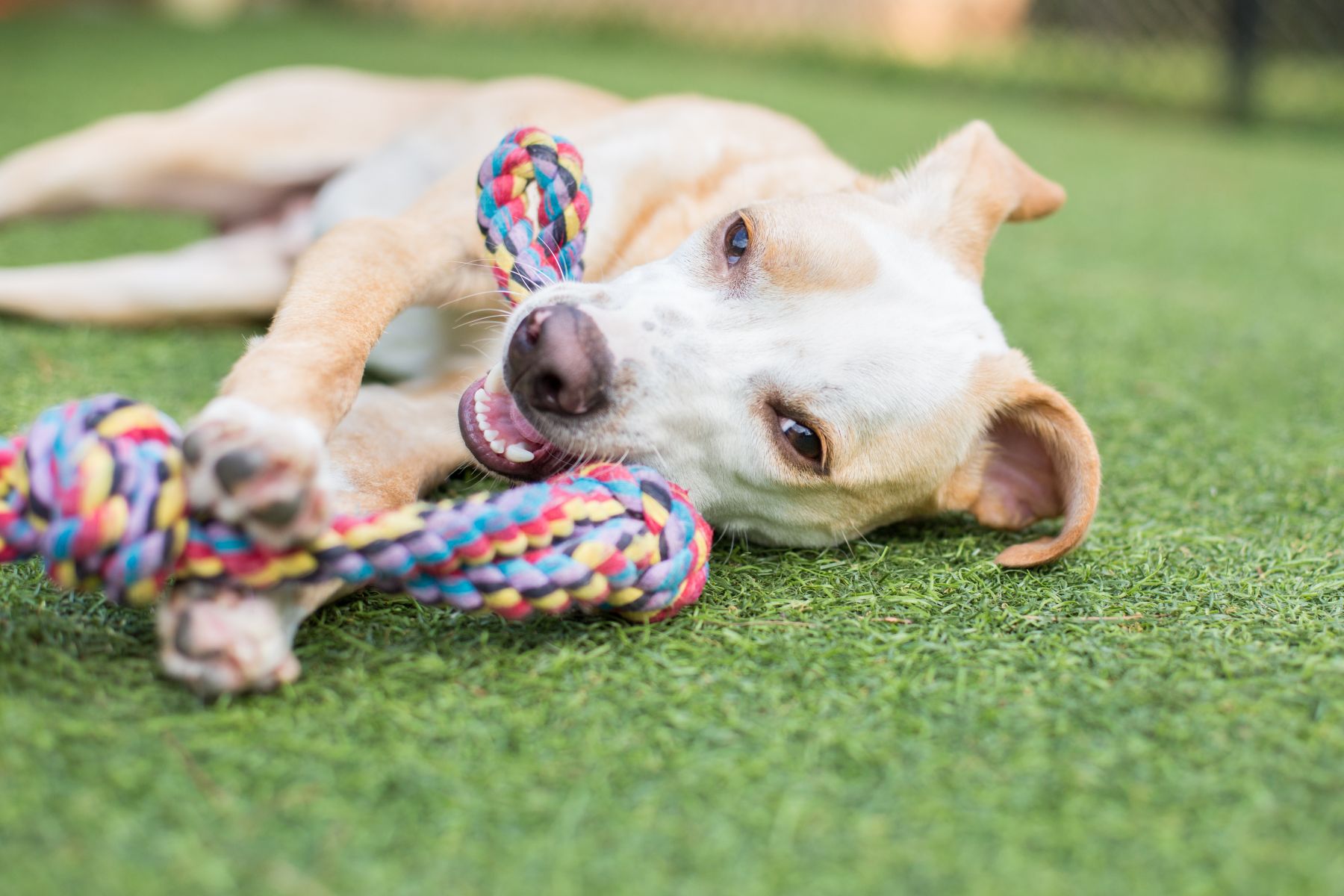
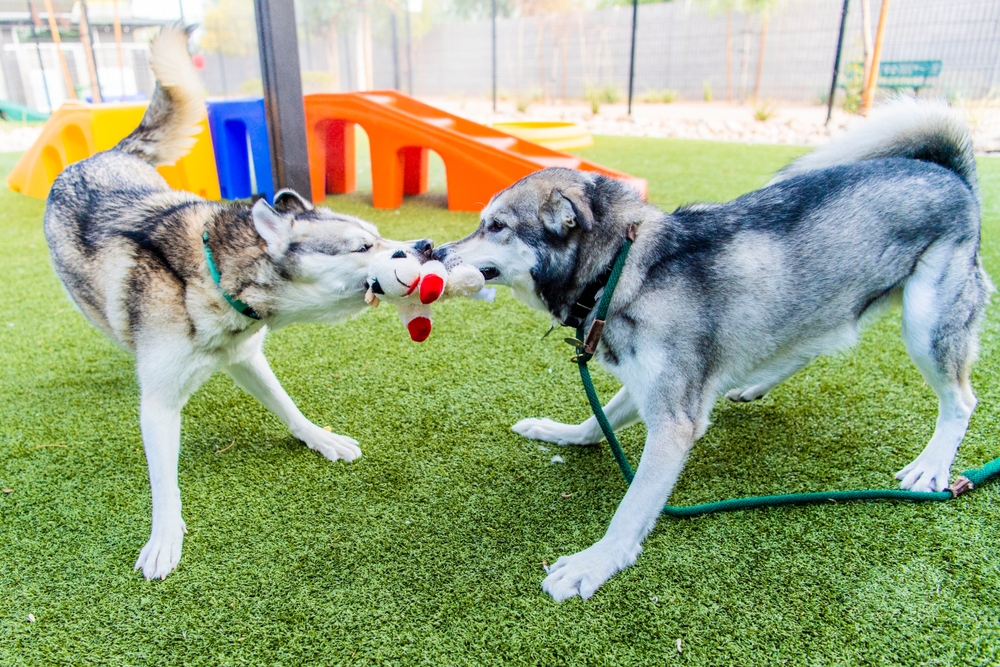
A busy day around Bee Cave can mean work, errands along Ranch Road 620, appointments, and plenty of time away from home. For some dogs, those hours alone can lead to boredom, excess energy, or a lack of social interaction. Dog daycare can provide a structured alternative, but the right choice depends on your dog’s temperament, health, energy level, and comfort around other dogs.
Quick answer:Dog daycare in Bee Cave, TX, may be a good fit for dogs that enjoy appropriate social interaction, benefit from activity during the day, and are comfortable in a supervised group environment. It is not automatically right for every dog. Age, personality, play style, health, and stress levels should all be considered before making daycare part of your dog’s routine.
What Bee Cave dog owners should know
A good daycare fit depends more on your dog’s individual temperament than simply how energetic or friendly your dog appears at home.
Bee Cave’s hot Central Texas weather can make supervised indoor or appropriately managed activity especially valuable during warmer parts of the year.
Dogs that regularly accompany their families around Bee Cave, Lakeway, and the Lake Travis area may benefit from positive social experiences, but group daycare should still match the individual dog’s comfort level.
Daycare can provide activity and enrichment while owners are busy, but it should not replace walks, training, rest, or individual time with your dog.
Signs of stress before, during, or after daycare deserve attention because some dogs prefer smaller groups or more individual activities.
Why Can Dog Daycare Be Helpful for Bee Cave Dogs?
Dog daycare can be helpful for Bee Cave dogs by providing supervised activity, social opportunities, mental stimulation, and a structured place to spend part of the day. For suitable dogs, that combination can be particularly useful when their owners have long workdays or schedules that make midday exercise difficult.
Life around western Travis County can keep families moving. Between Bee Cave, Lakeway, the Lake Travis area, and nearby communities such as The Hills and West Lake Hills, a dog’s normal routine may need to fit around commuting, school schedules, appointments, and errands.
Central Texas weather is another consideration. Hot afternoons can limit how long some dogs can comfortably exercise outside. Daycare can offer another option for appropriate activity when outdoor plans need to be adjusted for the conditions.
At Just Four Paws, we understand that daycare should be considered based on the individual dog rather than treated as a one-size-fits-all service. The goal is to find a routine that supports your dog’s physical and emotional needs.
What Local Conditions Should Dog Owners Consider?
Bee Cave dog owners should consider heat, daily schedules, activity levels, and their dog’s normal opportunities for exercise and interaction when deciding whether daycare makes sense. These local factors can affect both how much enrichment a dog receives at home and what type of daytime routine may work best.
Bee Cave experiences long periods of warm and hot weather. During especially hot conditions, owners may shift walks toward mornings and evenings rather than relying on lengthy midday outdoor exercise.
Development around the Highway 71 and Ranch Road 620 corridors also means many local households balance pet care with busy daily schedules. A dog that spends much of that time alone may need a different routine from a dog whose owner works from home or has several family members available throughout the day.
The dog’s needs should remain the deciding factor.
How Does Daycare Affect a Dog’s Daily Routine?
Daycare can add exercise, enrichment, social interaction, and structure to a dog’s day, while also creating a greater need for appropriate rest afterward. Dogs that enjoy the environment may return home ready to relax, although owners should distinguish healthy tiredness from signs that a dog was overwhelmed.
Potential benefits for an appropriate daycare candidate include:
Opportunities for movement and play
Mental stimulation from a changing environment
Interaction with other dogs when appropriate
A more structured daytime schedule
Less time spent home alone
More activity is not always better. Dogs also need downtime, sleep, and opportunities to disengage. A balanced routine considers both stimulation and recovery.
What Signs Suggest Your Dog May Enjoy Daycare?
Dogs that comfortably interact with other dogs, adapt well to new environments, and show healthy enthusiasm for social activity may be good candidates for daycare. No single behavior guarantees that a dog will enjoy a group setting, so owners should look at the dog’s overall pattern of behavior.
Possible positive signs include:
Your dog regularly shows relaxed, appropriate interest in other dogs.
Your dog enjoys interactive play without becoming excessively overwhelmed or intense.
Your dog adjusts reasonably well to unfamiliar environments.
Your dog has enough energy that additional daytime activity could be useful.
Your dog appears comfortable spending time away from you.
Your dog responds well to structured routines.
Your dog can settle and rest after periods of activity.
Dogs change over time, too. A dog that enjoyed highly social environments as a young adult may prefer a quieter routine later in life.
When Should You Talk to a Professional About Daycare?
You should talk with a daycare professional when you are unsure how your dog handles group environments, has an unusual play style, becomes easily overwhelmed, or has behavioral or physical needs that could affect participation. A professional evaluation can help determine whether the environment and available activities suit the individual dog.
Owners can observe plenty at home. Notice how your dog responds when encountering other dogs on walks, entering unfamiliar places, being separated from family members, and settling after exciting activities.
Professional guidance becomes more useful when those signals are difficult to interpret. Health concerns should also be discussed with your veterinarian, particularly if your dog has medical or mobility issues that could affect safe participation.
What Factors Commonly Determine Whether Daycare Is a Good Fit?
Temperament, social comfort, age, health, energy, and play style are among the most important factors determining whether a dog is suited to daycare. Bee Cave owners should evaluate these factors together rather than choosing daycare solely because their dog has lots of energy.
1. Social comfort
A dog can like certain dogs without enjoying a larger group. Familiar one-on-one play and group daycare are different experiences.
2. Energy level
Active dogs may appreciate additional opportunities for movement. However, activity should still be appropriate for the dog’s age and physical condition.
3. Play style
Dogs vary considerably in how they play. Compatibility matters because some dogs prefer energetic interaction while others are happier with gentler engagement.
4. Age and health
Puppies, adults, and senior dogs can have very different needs. Health and mobility can also influence which activities are appropriate.
5. Ability to relax
A positive daycare experience should include opportunities to decompress. Dogs that struggle to settle in stimulating environments may need a different approach.
How Can You Help Your Dog Adjust to Daycare?
You can help your dog adjust to daycare by keeping the transition manageable, watching behavior closely, and maintaining predictable routines at home. Bee Cave owners should pay particular attention to how their dogs behave before and after daycare rather than judging success only by how tired they seem.
Maintain normal feeding, walking, and sleeping routines when possible. Give your dog time to rest after an active day instead of immediately adding more demanding activities.
Watch for changes in appetite, sleep, enthusiasm, social behavior, or general demeanor. One unusually tired evening may simply reflect an active day, but repeated behavioral changes deserve closer attention.
Your dog’s response provides useful information about whether the routine is working.
What Results Should You Expect From Dog Daycare?
A well-matched daycare routine should give your dog appropriate activity and enrichment without leaving the dog consistently stressed, exhausted, or reluctant to return. Results vary because dogs have different personalities, energy levels, social preferences, and schedules.
Some dogs may thrive with regular daycare. Others may do better attending occasionally. Still others may prefer walks, individual enrichment, or quieter forms of care.
The goal is not to make every dog a daycare dog. It is to choose an environment that supports the individual dog’s quality of life.
What Mistakes Should Bee Cave Dog Owners Avoid?
Bee Cave dog owners should avoid assuming every social or energetic dog automatically needs frequent daycare. Matching the routine to the dog’s actual behavior is more useful than choosing daycare based on energy level alone.
Mistake: Assuming exhaustion means success. Consequence: Owners may overlook signs of overstimulation. Better approach: Consider your dog’s complete behavior before and after daycare.
Mistake: Ignoring personality. Consequence: A dog that prefers quiet interactions may find a highly social environment stressful. Better approach: Choose care based on temperament and play preferences.
Mistake: Expecting daycare to replace everything else. Consequence: Dogs may miss individual walks, training, bonding, and quiet enrichment. Better approach: Make daycare one part of a balanced routine.
Mistake: Keeping the same schedule as your dog ages. Consequence: A routine that once worked may become too demanding. Better approach: Reevaluate your dog’s needs periodically.
What Is a Common Daycare Scenario in Bee Cave?
A common Bee Cave daycare scenario involves an active dog whose family has a busy weekday schedule and wants to provide more structured daytime activity. This is a general example rather than a Just Four Paws client case study.
Imagine a household near the Lake Travis area with a dog that gets a morning walk but then spends much of the workday at home. During the hottest months, a long afternoon walk may not always be practical.
If that dog genuinely enjoys appropriate interaction and adapts comfortably to the daycare setting, selected daycare days could become part of the family’s weekly routine. The family can then evaluate the dog’s behavior and adjust frequency based on how the dog responds.
How Can Dog Daycare Support Your Pet Care Routine?
Dog daycare can support your pet care routine by providing another option for supervised daytime activity and enrichment when your schedule keeps you away from home. The most useful daycare plan is one built around your dog’s needs rather than simply filling hours in the day.
If you are considering daycare, our role is to help you explore whether the service makes sense for your dog and your schedule.
How Does Daycare Compare With Keeping Your Dog at Home?
Daycare provides supervised activity and potential social interaction, while staying home provides familiarity, privacy, and greater control over stimulation. Neither choice is universally better for Bee Cave dogs, so the right option depends on personality, schedule, health, and the type of care available at home.
Option
May Work Well For
Main Consideration
Dog daycare
Social dogs that enjoy structured activity
Group environments must suit the dog
Staying home
Dogs comfortable resting independently
Exercise and enrichment still need planning
Mixed routine
Dogs that benefit from both activity and downtime
Frequency should match the dog’s response
Individual care
Dogs that prefer less social stimulation
Care should still provide appropriate activity
A mixed routine can be especially practical for families whose schedules change throughout the week.
Where Can Local Dog Owners Consider Daycare?
Local dog owners in Bee Cave and surrounding western Travis County communities can consider daycare when they need dependable daytime care that fits their dog’s temperament and routine. Families in Lakeway, The Hills, the Lake Travis area, and nearby communities may have similar needs depending on their work and household schedules.
Choosing a convenient location matters, but your dog’s comfort with the environment matters more.
What Can Happen If Your Dog’s Daily Needs Are Not Being Met?
Dogs whose daily physical and mental needs are consistently unmet may develop unwanted behaviors or have difficulty settling, although the right solution is not necessarily daycare. Local owners should look at the full routine and determine whether their dogs receive suitable exercise, enrichment, rest, training, and interaction.
Waiting to address a poor routine can make everyday pet care more difficult for both the dog and household. The better approach is to identify what is missing and choose an appropriate solution.
No, dog daycare is not the right environment for every dog in Bee Cave. Some dogs enjoy group interaction and activity, while others prefer quieter environments or individual attention. Temperament, age, health, play style, and comfort around unfamiliar dogs should all influence the decision.
How often should my dog go to daycare?
The right daycare frequency depends on your dog’s energy, temperament, schedule, and response to each visit. Some dogs may enjoy several visits, while others benefit from occasional daycare combined with quieter days at home. Watch how your dog behaves afterward and adjust the routine accordingly.
Can daycare help an energetic dog in Bee Cave?
Daycare may provide useful activity and enrichment for an energetic Bee Cave dog if the dog also enjoys the daycare environment. High energy alone does not make a dog a good candidate. Social comfort, play style, ability to settle, and overall health should also be considered.
Is dog daycare useful during hot Central Texas weather?
Dog daycare can provide another activity option when Central Texas heat makes some outdoor exercise less practical, depending on how the facility manages its environment and activities. Owners should still plan safe walks and exercise around current weather conditions and their individual dog’s tolerance for heat.
How do I know whether my dog likes daycare?
Look for your dog’s overall behavior before and after visits rather than relying on excitement or tiredness alone. A dog that remains comfortable, eats and rests normally, and willingly follows the routine may be adapting well. Persistent reluctance, unusual behavior, or signs of stress deserve attention.
Can a senior dog attend daycare in the Lake Travis area?
Some senior dogs may enjoy daycare, but their individual health, mobility, temperament, and tolerance for activity should guide the decision. Older dogs may have different exercise and rest needs than younger dogs. Owners with health concerns should consult their veterinarian about appropriate activity.
Does daycare replace my dog’s daily walk?
No, daycare does not necessarily replace walks, individual attention, training, or quiet enrichment. Walks provide opportunities for sniffing, exploring, and spending one-on-one time with you. A balanced routine may include daycare while preserving other activities your dog enjoys.
What should I ask before choosing dog daycare near Bee Cave?
Ask how the daycare determines whether dogs are suited to its environment and how daily activities, supervision, rest, and individual needs are handled. You should understand what your dog’s day may look like and whether that structure is compatible with your dog’s personality, health, and play preferences.
Help Your Dog Enjoy a Better Day in Bee Cave
Finding the right daytime routine is about understanding your dog rather than following a standard formula. For families around Bee Cave and western Travis County, daycare can be a valuable option when the environment, activity level, and routine match the dog’s individual needs.
Find the Right Daycare Routine for Your Dog
We can help you explore whether dog daycare is a good fit for your dog and your family’s schedule.
Dogs in Bee Cave have plenty of reasons to get excited, from walks around the neighborhood to the sights, sounds, and activity that come with life near Lake Travis and the Texas Hill Country. But a quick trip outside does not always provide enough physical activity or mental stimulation, especially for young and energetic dogs.
The right amount of exercise depends on your dog’s age, breed tendencies, health, energy level, and personality. Many healthy adult dogs benefit from regular walks, play, training, and opportunities to explore throughout the day. For active dogs whose families have busy schedules, dog daycare can add structured activity and enrichment while providing a safe place to spend part of the day.
What local dog owners should know
Exercise needs vary considerably, so your dog’s behavior and physical condition are more useful than following one universal exercise target.
Central Texas heat can make long outdoor exercise sessions uncomfortable or unsafe, particularly during the hottest part of the day.
Dogs in Bee Cave may benefit from combining walks with indoor play, training, enrichment, and appropriately supervised social activity.
Rest matters too, and dogs should have opportunities to settle and recover between periods of activity.
Daycare can be one part of an exercise routine for dogs that enjoy the environment and are comfortable around other dogs.
Why Does Exercise Matter for Dogs in Bee Cave?
Exercise matters for dogs in Bee Cave because regular physical movement and mental stimulation give them appropriate outlets for their energy while supporting their overall well-being. The challenge for local owners is providing that activity consistently while adapting routines to work schedules, individual dog needs, and Central Texas weather.
An energetic dog may be ready for another activity even after a morning walk. Without enough appropriate stimulation, some dogs find their own entertainment. That might mean persistent attention-seeking, restless pacing, chewing inappropriate objects, or struggling to settle when the family wants to relax.
Local weather adds another consideration. During hot periods in Travis County and communities around Lake Travis, owners may need to shift longer walks to cooler times and use indoor activities during hotter hours.
Just Four Paws understands that local families need practical ways to keep their dogs active, engaged, and cared for. At our daycare, we can help supplement the exercise and attention dogs receive at home as part of a balanced routine.
How Much Exercise Does Your Dog Actually Need?
Your dog’s ideal amount of exercise is based on the individual dog rather than a single daily number that works for every pet. Age, physical health, breed characteristics, fitness, temperament, and the intensity of the activity all influence how much movement is appropriate.
Puppies can have plenty of energy but also need significant rest. Their activity should be appropriate for their stage of physical development.
Healthy adult dogs often need a combination of physical exercise and mental activity. High-energy dogs may require more opportunities to move, play, train, and explore than lower-energy companions.
Senior dogs can still benefit from regular activity, but their routines may need to become gentler or shorter as their mobility and stamina change.
If you are unsure how much or what type of exercise is medically appropriate for your dog, your veterinarian is the right resource for individualized guidance.
How Does Central Texas Weather Affect Dog Exercise?
Central Texas weather can limit when and how dogs should exercise outdoors, especially during periods of intense heat and strong sunshine. Bee Cave dog owners may need to move outdoor activities to cooler parts of the day and rely more heavily on alternative forms of stimulation when conditions are uncomfortable.
Hot pavement and prolonged strenuous activity can create unnecessary risks. Owners should pay attention to their dog’s comfort rather than trying to complete a predetermined walk regardless of conditions.
Residents around Lakeway, The Hills, Falconhead, and other nearby communities can build flexibility into daily routines. A shorter outdoor outing paired with training games, food puzzles, scent activities, or supervised indoor play can still give a dog meaningful engagement.
What Are Signs Your Dog May Need More Activity?
A dog that consistently struggles to settle or repeatedly seeks outlets for unused energy may benefit from additional physical exercise or mental enrichment. Behavior alone does not prove that a dog needs more exercise, but patterns can help Bee Cave owners decide whether their current routine deserves another look.
Possible signs include:
Restlessness even after the household has settled down
Frequent attempts to initiate play or demand attention
Destructive chewing that appears related to boredom
Digging or other repetitive activities
Difficulty settling after being home alone
Excessive enthusiasm when normal activity begins
Constantly searching for something to do
Sudden or significant behavioral changes should not automatically be blamed on insufficient exercise. Pain, illness, fear, anxiety, and other issues can affect behavior, so veterinary or qualified behavioral guidance may be appropriate.
When Can Dog Daycare Help an Active Dog?
Dog daycare can help active dogs by adding supervised activity, engagement, and appropriate opportunities for social interaction to their regular routine. It can be especially useful for Bee Cave families who cannot provide several periods of activity at home during a busy workday.
Daycare is not simply a substitute for a walk. A well-rounded routine can include time with family, neighborhood walks, training, enrichment, rest, and appropriate play.
Not every dog enjoys the same environment, either. Some dogs thrive around canine companions, while others prefer quieter activities or more individual attention. Owners should consider temperament, comfort, and behavior when deciding whether daycare is a good match.
What Are Common Exercise Mistakes Local Dog Owners Make?
Common exercise mistakes include focusing only on physical exhaustion, overlooking mental enrichment, exercising too intensely in the heat, and assuming every dog needs the same routine. A better approach is to adjust activity to the individual dog and the conditions in the Texas Hill Country.
Mistake: Relying only on a long walk. Consequence: Some active dogs are physically tired but remain mentally restless. Better approach: Combine walking with sniffing, training, play, and enrichment.
Mistake: Exercising during the hottest part of the day. Consequence: Heat can make outdoor activity unnecessarily demanding. Better approach: Consider cooler periods and indoor alternatives when local temperatures rise.
Mistake: Trying to exhaust a dog every day. Consequence: Constant high-intensity activity may not teach a dog how to settle. Better approach: Balance activity with calm periods and appropriate rest.
Mistake: Comparing one dog with another. Consequence: A routine that suits one dog may be too demanding or insufficient for another. Better approach: Watch your own dog’s behavior, comfort, and recovery.
What Does a Balanced Exercise Routine Look Like?
A balanced dog exercise routine combines physical movement, mental stimulation, social opportunities when appropriate, and enough downtime for recovery. For Bee Cave families, that balance may change throughout the year as temperatures, schedules, and a dog’s needs change.
A morning might include a walk while conditions are comfortable. During the day, enrichment, training, or daycare can provide additional engagement. The evening might include another walk, a sniffing session, gentle play, or quiet time with the family.
The goal is not to keep a dog busy every minute. Dogs also need opportunities to sleep, rest, and learn that being calm is part of everyday life.
What Can You Expect From Adding Daycare to Your Dog’s Routine?
Adding daycare can give a suitable dog another structured outlet for activity and engagement, but results will vary based on the individual dog’s temperament and needs. Some dogs may return home ready to relax, while others may need time to adjust to the additional stimulation.
Owners should watch how their dog behaves before and after daycare. Appetite, enthusiasm, ability to settle, and general comfort can provide useful clues about how well the routine is working.
Daycare also does not eliminate the value of time with you. Walks through your neighborhood, training at home, and quiet companionship continue to be important parts of your relationship.
What Is a Common Bee Cave Scenario for Active Dogs?
A common Bee Cave scenario is an energetic dog whose family can provide morning and evening attention but has limited availability during the middle of a workday. The dog may get a morning walk and still have considerable energy while the household is busy or away.
Rather than relying entirely on a longer evening walk, the family might incorporate daycare on selected days. On other days, they might use food enrichment, short training sessions, sniff-focused walks, and indoor games.
This is not a case study or a prescription for every dog. It simply illustrates how local families can combine different types of activity rather than relying on one solution.
How Can Just Four Paws Support Your Dog’s Routine?
Our daycare can support your dog’s routine by providing another option for care, activity, and engagement when your schedule makes daytime attention difficult. For dogs that are a good fit for daycare, it can complement the walks, play, training, and companionship they already receive at home.
The best routine is one that works for both the dog and the family while respecting the dog’s individual needs.
How Does Daycare Compare With Exercising Your Dog at Home?
Daycare and at-home exercise serve different purposes, and many active dogs can benefit from a combination rather than choosing only one. Home activities provide valuable one-on-one time, while daycare can add daytime engagement when Bee Cave owners are working, running errands, or managing busy schedules.
At-home exercise gives you direct control over the activity and can strengthen your relationship through walks, games, and training. Daycare can expand the dog’s routine beyond what is practical during certain parts of your week.
The right balance depends on your dog. A highly social, active dog may enjoy regular daycare, while another may do better with occasional visits or primarily individual activities.
Which Areas Can Local Dog Owners Visit Us From?
Our Bee Cave location can be convenient for dog owners in the surrounding Lake Travis and western Travis County area. Families in nearby communities such as Lakeway and The Hills may also be looking for practical ways to add daytime care and activity to their dogs’ routines.
Local schedules and driving patterns vary, so owners should choose a routine that remains realistic week after week.
What Happens When an Active Dog Consistently Gets Too Little Enrichment?
Consistently providing too little appropriate activity can leave some active dogs restless, bored, or more likely to create their own outlets for energy. Waiting until unwanted behavior appears can make daily life harder for both dogs and their families.
More activity is not automatically the answer to every behavioral problem. The better goal is an appropriate mix of physical movement, mental enrichment, training, rest, and professional guidance when behavior or health concerns warrant it.
How much exercise does a dog need each day in Bee Cave?
There is no single daily exercise amount that is appropriate for every dog in Bee Cave. Age, health, breed characteristics, fitness, temperament, and activity intensity all matter. Watch how comfortably your dog participates and recovers, and ask your veterinarian for guidance when health, age, or mobility affects exercise choices.
Is dog daycare good exercise for active dogs?
Dog daycare can provide useful activity and engagement for active dogs that enjoy and are comfortable in a daycare environment. It can complement walks and activities at home rather than replacing them. Owners should consider their dog’s temperament, social preferences, health, and response to the daycare routine.
How should I exercise my dog during hot weather in Bee Cave?
During hot weather in Bee Cave, consider moving outdoor exercise to cooler periods and using indoor enrichment when conditions are uncomfortable. Shorter outings, sniffing activities, training games, and appropriate indoor play can keep dogs engaged without making every exercise session a long outdoor walk during Central Texas heat.
Can daycare replace my dog’s daily walks?
Daycare does not need to replace walks because the two activities can provide different experiences. Neighborhood walks offer sniffing, exploration, training opportunities, and one-on-one time with you. Daycare can add activity and engagement during the day, creating a more varied routine for dogs that enjoy it.
Can puppies attend dog daycare in the Bee Cave area?
Whether daycare is appropriate for a puppy depends on factors including age, health, vaccination status, temperament, and the daycare provider’s requirements. Puppies also need substantial rest and developmentally appropriate activity. Ask your veterinarian about health considerations and contact us directly for current daycare participation requirements.
Do senior dogs in Travis County still need exercise?
Senior dogs generally still benefit from appropriate activity, although the type and intensity may change with age and health. Gentle walks, sniffing, enrichment, and other comfortable activities can remain valuable. A veterinarian can help Travis County owners adapt routines when arthritis, mobility changes, or other medical conditions are involved.
How do I know whether my dog would enjoy daycare?
Dogs that are comfortable in the daycare environment may show enthusiasm while still being able to relax and recover afterward. Social history, temperament, and individual preferences matter. A dog that finds group settings stressful may need a different approach, so daycare should be selected based on the individual rather than energy level alone.
What can I do when it is too hot for a long Lake Travis area walk?
Indoor enrichment and shorter outdoor outings can help keep your dog engaged when Lake Travis area temperatures make a long walk impractical. Try training exercises, scent games, food enrichment, or appropriate indoor play. Outdoor activity can then be scheduled for times when conditions are more comfortable.
Help Your Bee Cave Dog Enjoy a More Balanced Day
Active dogs need more than a backyard break, but the answer is not simply exercising them until they are exhausted. A thoughtful combination of movement, enrichment, companionship, and rest can help create a routine that fits your dog and your life in Bee Cave.
Give Your Dog an Engaging Day Close to Home
At Just Four Paws, we’re here to help local dog owners explore daycare as part of a balanced routine for active dogs.
Dogs thrive when they have positive opportunities to interact with people, other dogs, and new environments. In a growing community like Bee Cave, TX, regular socialization helps dogs become more confident, better behaved, and more comfortable in everyday situations, whether they are visiting a local park, walking through the neighborhood, or meeting guests at home.
Quick Answer
Regular socialization is important for dogs of all ages because it helps build confidence, reduces fear and anxiety, encourages appropriate behavior around people and other animals, and supports lifelong mental and emotional well-being. Puppies benefit from early positive experiences, while adult and senior dogs continue to gain from safe, structured social interactions that keep their minds active and their behavior well balanced.
What Local Readers Should Know
Dogs in Bee Cave, TX often encounter busy community spaces, walking trails, and outdoor gathering areas, making good social skills especially valuable.
Positive socialization should happen gradually and always focus on creating enjoyable experiences rather than forcing interactions.
Even older dogs can become more confident and adaptable through consistent, age-appropriate social opportunities.
Nearby communities like Lakeway, Spicewood, and Dripping Springs offer a variety of pet-friendly environments that can introduce dogs to new sights, sounds, and people.
Regular social experiences can help make veterinary visits, grooming appointments, and boarding less stressful.
Why This Matters Locally
Regular socialization is especially valuable in Bee Cave because many families enjoy an active outdoor lifestyle. Local residents frequently visit places such as the Hill Country Galleria, neighborhood walking paths, community parks, and pet-friendly patios throughout Travis County. Dogs that are comfortable around unfamiliar people, children, bicycles, and other pets are more likely to enjoy these outings safely and confidently.
Changing weather throughout the Texas Hill Country also creates opportunities to expose dogs to different environments across the seasons. From warm summer evenings to cooler fall mornings, experiencing a variety of situations helps dogs remain adaptable instead of becoming anxious when routines change.
At Just Four Paws, we believe socialization is not something dogs outgrow. We help dogs continue building positive experiences throughout every stage of life so they can become confident companions wherever life takes them.
Local Field Observations
Professional trainers frequently observe that many behavior challenges develop not because dogs are aggressive, but because they lack positive experiences in unfamiliar situations. Dogs that rarely meet new people or encounter different environments may become nervous when routines suddenly change.
In the Bee Cave area, growing neighborhoods, increased pedestrian traffic, and popular outdoor destinations mean dogs regularly encounter new experiences. Ongoing socialization helps prepare them for these everyday situations before they become overwhelming.
Local Impact
Poor socialization can affect much more than neighborhood walks.
Dogs that struggle around unfamiliar people or other animals may avoid enjoyable activities, become stressed during veterinary appointments, resist grooming, or experience anxiety during boarding. Owners may also feel limited in where they can safely bring their pets.
Well-socialized dogs are generally more relaxed during everyday experiences, making life easier for both the dog and the family.
Warning Signs Your Dog May Need More Socialization
Regular socialization may be beneficial if your dog:
Becomes fearful around unfamiliar people.
Barks excessively when seeing other dogs.
Pulls away from new environments.
Hides behind family members during outings.
Reacts nervously to unfamiliar noises.
Shows excessive excitement around every new dog.
Struggles to settle after meeting visitors.
Appears anxious during walks in busy areas.
These behaviors do not necessarily mean a dog is aggressive. In many cases, they indicate uncertainty that can often improve with patient, positive social experiences.
When to Seek Professional Guidance
Professional guidance is recommended when a dog’s fear or reactivity makes everyday situations difficult or potentially unsafe.
Owners can safely introduce controlled new experiences, reward calm behavior, and gradually increase exposure to different environments. However, if a dog consistently lunges, growls, panics, or cannot recover after stressful encounters, structured training and supervised socialization provide a safer path forward.
Early intervention often leads to better long-term progress than waiting for unwanted behaviors to become established.
Common Local Causes of Limited Socialization
Several factors can reduce social opportunities for dogs in Bee Cave and surrounding communities.
Limited Early Experiences
Puppies that spend little time meeting new people, friendly dogs, or experiencing different environments may struggle later in life.
Lifestyle Changes
Moving to a new neighborhood, changes in family routines, or working from home can unintentionally reduce a dog’s regular exposure to new situations.
Negative Past Experiences
One frightening interaction can make some dogs hesitant to approach unfamiliar people or dogs without careful rebuilding of confidence.
Age-Related Changes
Senior dogs sometimes become more cautious as their hearing, vision, or mobility changes, making gradual socialization even more important.
Prevention and Maintenance
Socialization works best when it becomes part of a dog’s regular routine rather than a one-time event.
Helpful habits include:
Taking regular walks through different neighborhoods around Bee Cave.
Visiting pet-friendly outdoor spaces during quieter times.
Scheduling positive play opportunities with compatible dogs.
Rewarding calm behavior around new people and environments.
Introducing new experiences gradually instead of all at once.
Respecting a dog’s comfort level while encouraging steady progress.
Consistency is far more effective than occasional overwhelming experiences.
Expected Results
With regular positive socialization, many dogs become more relaxed, attentive, and adaptable.
Owners often notice improved confidence during walks, calmer greetings with visitors, easier veterinary appointments, and reduced anxiety in unfamiliar settings. Every dog progresses at a different pace, especially adults who may have had limited social experiences earlier in life.
Common Mistakes
Mistake: Forcing Interactions
Consequence: The dog becomes more fearful.
Better Approach: Allow the dog to approach new people or dogs at its own pace while rewarding calm behavior.
Mistake: Waiting Until Problems Develop
Consequence: Fearful behaviors become more difficult to change.
Better Approach: Continue socialization throughout every life stage, even after puppyhood.
Mistake: Visiting Overcrowded Areas Too Soon
Consequence: Dogs become overwhelmed.
Better Approach: Start with quieter environments before gradually increasing distractions.
Mistake: Assuming Older Dogs Cannot Learn
Consequence: Missed opportunities for improvement.
Better Approach: Continue introducing positive experiences appropriate for the dog’s age and comfort level.
Common Local Scenario
A family in Bee Cave adopts an adult rescue dog that enjoys quiet walks but becomes nervous around busy shopping areas and unfamiliar visitors. Through gradual exposure, structured introductions, and positive reinforcement, the dog slowly gains confidence and becomes much more comfortable accompanying the family to pet-friendly locations throughout the area.
Related Service Solutions
Professional daycare, structured playgroups, obedience training, and supervised socialization sessions all support healthier social development.
These services provide safe opportunities for dogs to practice appropriate behavior while building positive experiences with people and other dogs under professional supervision.
Provides customized guidance and structured progress.
Combination Approach
Long-term success
Blends home practice with professional support.
Service Areas
We proudly serve families throughout Bee Cave, TX, along with Lakeway, Dripping Springs, Spicewood, The Hills, West Lake Hills, and surrounding Travis County communities. Our goal is to help local dogs build confidence through safe, positive social experiences that fit their individual personalities.
Cost of Ignoring the Issue
Delaying socialization can allow fear, anxiety, and unwanted behaviors to become more established over time.
Dogs that miss regular positive experiences may become increasingly uncomfortable around unfamiliar people, environments, or other animals, making everyday activities more stressful for everyone involved.
Is socialization still important for adult dogs in Bee Cave?
Yes. Adult dogs continue learning throughout life. Positive social experiences help maintain confidence while reducing fear of unfamiliar situations common throughout Bee Cave and surrounding communities.
When should puppies begin socialization?
Puppies should begin positive, veterinarian-approved socialization as early as safely recommended. Early experiences often lay the foundation for lifelong confidence.
Can senior dogs still benefit from socialization?
Yes. Senior dogs often enjoy gentle, low-stress social experiences that provide mental stimulation while helping them stay comfortable with routine changes.
Does socialization mean meeting every dog?
No. Healthy socialization focuses on positive experiences, not quantity. Calm interactions are much more valuable than overwhelming encounters.
Are dog parks the best place for socialization in Bee Cave?
Not always. Some dogs benefit more from structured introductions, supervised daycare, or controlled playgroups before visiting busy off-leash areas.
How often should my dog socialize?
Most dogs benefit from consistent weekly social experiences. The ideal frequency depends on age, personality, confidence level, and individual needs.
What if my dog seems fearful around strangers?
Fearful dogs often benefit from gradual exposure paired with positive reinforcement. Professional guidance can help create a plan that builds confidence safely.
Can daycare help improve social skills?
Yes. Well-managed daycare programs provide supervised opportunities for dogs to practice appropriate social behavior while learning positive interactions with other dogs and people.
Helping Dogs Build Confidence for Life
Regular socialization supports happier, healthier dogs at every stage of life. Whether you have an energetic puppy, an adult rescue, or a senior companion, positive experiences help create confidence that carries into everyday adventures throughout Bee Cave and the surrounding Texas Hill Country.
Help Your Dog Thrive Through Positive Socialization
Every dog deserves opportunities to build confidence in a safe, encouraging environment.
Planning ahead can make your dog’s boarding experience much more comfortable, especially if you’re preparing for a stay in Bee Cave, TX. Whether you’re heading out for a weekend getaway or an extended trip, packing the right items helps your dog settle into a new environment with less stress and more confidence.
Quick Answer
The best things to pack for your dog’s boarding stay include their regular food, any required medications, feeding instructions, emergency contact information, and approved comfort items if the boarding facility allows them. Packing familiar essentials helps maintain your dog’s routine and supports a smoother transition during their stay.
What Local Pet Owners Should Know
Summer temperatures in Bee Cave and throughout the Texas Hill Country can be hot, so keeping your dog’s routine consistent before boarding can help reduce stress.
If your dog enjoys visiting places like Bee Cave Central Park or walking around the Hill Country Galleria, bringing a familiar blanket or toy may help them feel more at home.
Be sure to provide accurate feeding and medication instructions so your dog’s daily routine remains consistent.
Check your boarding facility’s policies before packing extra items, as some personal belongings may not be permitted for safety or sanitation reasons.
Make sure your dog’s vaccinations are current well before your scheduled boarding date, as most facilities require proof before check-in.
Why This Matters Locally
Packing thoughtfully matters for dogs staying in Bee Cave because local families often travel during school breaks, holiday weekends, and throughout the busy summer season. Boarding facilities serving Bee Cave, Lakeway, Spicewood, Dripping Springs, and the greater Travis County area may experience increased demand during these times. Preparing everything in advance helps make check-in faster while giving your dog the best chance at a comfortable stay.
At Just Four Paws, we know that a little preparation goes a long way. Once you’ve packed the essentials, we focus on providing attentive care so your dog can enjoy their stay while you’re away.
What Should You Pack?
The most important items are the ones that help maintain your dog’s normal routine.
Regular Food
Bring enough food for your dog’s entire stay, plus an extra day’s supply in case your travel plans change. Keeping your dog on their regular diet helps reduce the chance of digestive upset.
If possible:
Portion meals into individual bags or containers.
Clearly label feeding amounts.
Include any feeding schedule instructions.
Medications
If your dog takes medication, pack:
Medication in its original container.
Clear dosing instructions.
Administration times.
Any special handling instructions.
Notify the boarding staff about all medications, including supplements.
Emergency Contacts
Provide:
Your mobile number.
An alternate emergency contact.
Your veterinarian’s information.
Any special medical concerns.
Having current information allows staff to reach you quickly if needed.
Feeding Instructions
Some dogs have unique routines. Include details such as:
Slow feeding requirements.
Food allergies.
Foods to avoid.
Special treats that are approved.
Feeding preferences if applicable.
Comfort Items
Many dogs feel more relaxed with familiar scents.
Depending on facility policies, acceptable comfort items may include:
A favorite blanket.
A well-loved toy.
An old T-shirt with your scent.
Avoid bringing valuable items that could become damaged or misplaced.
Professional Field Observation
Based on common boarding experiences, dogs that maintain a familiar feeding schedule and arrive with clear care instructions often settle into their new environment more quickly. Every dog is different, but consistency usually helps reduce unnecessary stress during the first day of boarding.
Local Impact
Busy travel seasons throughout Bee Cave and neighboring communities often mean boarding reservations fill well in advance. Preparing your dog’s belongings before your departure date helps make check-in more efficient and allows staff to focus on helping your dog become comfortable rather than gathering missing information.
Warning Signs That You Forgot Something
Before leaving for the boarding facility, double check for these commonly overlooked items:
Not enough food for the entire stay.
Missing medication instructions.
Forgotten emergency contact information.
Expired vaccination records.
Missing feeding schedule.
Unlabeled food containers.
Special dietary needs that were not documented.
When to Call the Boarding Facility
If you’re unsure what to pack, contact your boarding provider before arrival.
It’s especially helpful to call if your dog:
Takes multiple medications.
Eats a prescription diet.
Has mobility limitations.
Has anxiety or behavioral concerns.
Requires special feeding equipment.
Has recently recovered from illness.
The staff can explain exactly what should and should not be packed.
Common Local Considerations
Several factors influence how Bee Cave pet owners prepare for boarding.
Warm Weather
Texas heat can affect travel schedules and outdoor activity, making hydration and routine especially important before arrival.
Holiday Travel
Long weekends and holidays often increase boarding demand, so preparing early can help avoid last-minute stress.
Active Lifestyles
Many local dogs regularly enjoy hiking trails, neighborhood walks, and outdoor adventures around the Hill Country. Keeping their familiar routine before boarding can help ease the transition.
Prevention and Preparation Tips
A little preparation before boarding can make a significant difference.
Label every item clearly.
Pack food in sealed containers.
Review medication instructions.
Confirm vaccination requirements in advance.
Avoid changing your dog’s diet immediately before boarding.
Schedule boarding early during peak travel seasons.
Arrive with enough time for a calm check-in.
What to Expect
Most dogs adjust within the first day or two once they establish a routine. Familiar food, consistent care, and clear instructions help staff provide the best possible experience throughout your dog’s stay.
Every dog adapts differently, and some may become comfortable more quickly than others.
Common Packing Mistakes
Bringing Too Many Toys
Consequence: Extra items can become misplaced or may not be permitted.
Better approach: Bring one approved comfort item if allowed.
Forgetting Feeding Instructions
Consequence: Staff may need clarification before meals.
Consequence: Meals become harder to organize accurately.
Better approach: Portion meals ahead of time.
Waiting Until Departure Day
Consequence: Important items are easier to forget.
Better approach: Pack everything the night before.
Common Local Scenario
A Bee Cave family heads out for a long weekend while their dog stays at a boarding facility. Because meals were pre-portioned, medications were clearly labeled, and emergency contacts were included, check-in was quick and their dog’s routine remained consistent throughout the stay.
We proudly serve pet owners throughout Bee Cave as well as nearby Lakeway, Spicewood, Dripping Springs, West Lake Hills, and surrounding Travis County communities. Our goal is to help local dogs enjoy a comfortable, well-cared-for boarding experience.
The Cost of Forgetting Important Items
Leaving out food, medication instructions, or emergency contact information can create unnecessary delays and additional stress during check-in. Taking a few extra minutes to prepare helps your dog’s stay begin as smoothly as possible.
What food should I bring for boarding in Bee Cave?
Bring your dog’s regular food for the entire stay, plus an extra day’s supply. Keeping the same diet helps reduce digestive upset and allows your dog to maintain their normal routine.
Can I bring my dog’s favorite blanket?
Yes, many boarding facilities allow approved comfort items. Check with your provider beforehand since policies vary and some items may not be accepted for safety or sanitation reasons.
Do boarding facilities in Bee Cave require vaccination records?
Yes, most boarding providers require current vaccination documentation before check-in. Confirm the specific requirements well before your scheduled stay.
Should I pack medications separately?
Yes. Bring medications in their original containers along with detailed written instructions about dosage, timing, and any special administration requirements.
How early should I book boarding around Bee Cave?
Booking early is recommended, especially before holidays, school breaks, and busy summer travel periods when boarding facilities often fill quickly.
What if my dog has special feeding instructions?
Provide clear written directions that explain meal portions, feeding times, allergies, supplements, and any special dietary needs so staff can follow your dog’s routine as closely as possible.
Is it okay to bring several toys?
Usually, fewer items are better. One approved comfort item is often enough, but always check the boarding facility’s policies before packing multiple toys.
What emergency information should I provide?
Include your mobile number, an alternate emergency contact, your veterinarian’s information, and any important medical details that staff should know during your dog’s stay.
Helping Your Dog Feel at Home While You’re Away
Preparing your dog’s boarding bag is one of the easiest ways to support a positive boarding experience. With familiar food, clear instructions, and a few essential items, you can help your dog stay comfortable while you’re away.
Give Your Dog a Comfortable Boarding Experience in Bee Cave
Our team is here to help make your dog’s stay safe, comfortable, and enjoyable from check-in to pickup.
Leaving your dog behind while you travel is never easy. Whether you are heading out for a long weekend or an extended vacation, finding the right dog boarding facility can make all the difference between a stressful goodbye and a peaceful departure. The good news is that with a little research and the right questions in hand, you can find a place where your pup will be safe, comfortable, and even happy while you are away.
Safety and Security Standards
The first thing any responsible pet owner should evaluate is how seriously a dog boarding facility takes safety and security. A well-run facility should have secure fencing, double-gated entry points, and clear protocols for preventing escapes. Dogs are curious and sometimes unpredictable, and a facility that relies on a single gate or a loosely monitored yard is taking unnecessary risks with your pet.
Ask about how staff handles dog introductions, especially if your pet will be spending time in group play areas. Not all dogs are compatible, and a quality dog boarding facility will conduct temperament evaluations before allowing any new dog into group settings. This is not just good practice; it is essential for preventing fights and injuries.
Look into whether the facility has 24-hour supervision or if the dogs are left alone overnight. Some boarding facilities have staff on-site around the clock, while others operate more like a drop-off kennel with limited overnight monitoring. Depending on your dog’s anxiety levels and medical needs, overnight supervision could be a non-negotiable requirement.
Staff Qualifications and Experience
The people caring for your dog matter just as much as the physical space. When you tour a dog boarding facility, take time to speak with the staff and observe how they interact with the animals. Are they calm, attentive, and genuinely enthusiastic about working with dogs? Do they get down to the dogs’ level, make eye contact, and engage positively?
Ask about staff-to-dog ratios. A crowded facility with too few caregivers puts every animal at a disadvantage. Staff members may miss signs of stress, illness, or conflict when they are stretched too thin. A reasonable ratio ensures that each dog receives adequate attention throughout the day.
Find out whether any staff members hold certifications in pet first aid or animal behavior. While formal credentials are not always required in the dog boarding industry, they are a strong indicator that the facility invests in professional development. A team trained to recognize the early signs of a medical emergency could save your dog’s life in a critical moment.
Cleanliness and Overall Environment
A clean dog boarding facility is a healthy dog boarding facility. During your visit, use all your senses. The space should not have an overwhelming odor of urine or feces, even in an active dog environment. Some natural animal smell is expected, but strong or persistent odors suggest that cleaning protocols are not up to standard.
Observe the sleeping areas, play zones, and feeding stations. Kennels should be sanitized regularly, and bedding should be clean and dry. Food and water bowls should be washed between uses, not simply refilled. Ask how often deep cleaning is performed and what products are used, particularly if your dog has allergies or sensitive skin.
Pay attention to the overall atmosphere of the facility as well. Dogs are sensitive to their environments, and a chaotic, noisy space can elevate stress levels quickly. A good facility will have designated quiet areas for dogs that need rest and separation from the excitement of group play. Natural lighting, ventilation, and reasonable noise control all contribute to a healthier boarding experience for your pet.
Health Requirements and Veterinary Protocols
Any reputable dog boarding facility will require proof of up-to-date vaccinations before admitting your pet. Core vaccines like rabies, distemper, and Bordetella are standard requirements, and some facilities may also ask for a negative fecal exam or proof of flea prevention. These requirements are not just bureaucratic hurdles; they protect every dog in the facility from preventable illness.
Ask how the facility handles medical emergencies. Is there a veterinarian on call, or does the staff have a relationship with a nearby animal hospital? Knowing that there is a clear plan in place for emergencies will give you peace of mind while you are away. Some facilities even have veterinary technicians on staff, which is an added bonus for dogs with chronic health conditions.
Inquire about how medications are administered. If your dog takes daily medication, find out whether staff members are trained and comfortable with the process. A good facility will keep detailed records of each dog’s health status, feeding schedule, and any medications given during the stay. Transparency around these processes is a sign of a facility that takes its responsibilities seriously.
Reviews, Reputation, and a Personal Visit
No amount of brochure reading or website browsing can replace an in-person visit to a dog boarding facility. Reputable facilities will welcome tours and encourage prospective clients to see the space before making a reservation. If a facility discourages or refuses walk-in visits, that is a significant red flag worth taking seriously.
Before you visit, spend time reading online reviews from other pet owners in your area. Look for patterns rather than focusing on any single review. Consistent praise for attentive staff and a clean environment is a good sign. Consistent complaints about poor communication, unexplained injuries, or sick dogs returning home deserve your full attention.
Word-of-mouth referrals from friends, neighbors, or your veterinarian can be especially valuable. People who have personally used a dog boarding facility and had a positive experience are often the most reliable sources of honest feedback. Your vet may also know which local facilities maintain strong health and safety records based on the condition of the dogs they see afterward.
During your visit, watch how the current guests are behaving. Dogs that appear relaxed, engaged, and comfortable in their surroundings are generally a good sign. Dogs that appear fearful, withdrawn, or are displaying excessive stress behaviors may indicate that the environment is not meeting their emotional needs.
Finally, trust your instincts. You know your dog better than anyone. If something feels off during your visit, whether it is the demeanor of the staff, the condition of the kennels, or simply a general sense of unease, it is perfectly reasonable to keep looking. The right dog boarding facility will leave you feeling confident and reassured, not uncertain.
Conclusion
Choosing a dog boarding facility is one of the most important decisions you will make as a pet owner. By focusing on safety, qualified staff, cleanliness, health protocols, and the facility’s overall reputation, you can find a place where your dog will thrive in your absence. Take the time to do your homework, visit in person, and ask every question you have. Your dog cannot tell you what kind of care they received, so it is up to you to choose wisely before you ever hand over the leash.
Need Dog Services Near You?
At Just Four Paws, Inc., we understand that your furry friends are more than just pets – they are cherished members of your family. That’s why we are committed to providing the best possible care for them during their stay with us. Our pet boarding services offer a safe and comfortable environment where your pets will receive individual attention and plenty of playtime. Additionally, our expert groomers are dedicated to pampering your pets and ensuring they look and feel their best. Trust Just Four Paws, Inc. with your pets’ needs and give them the love and care they deserve. Contact us today to learn more about what we can do for you!